
New Clients First Exam is just $44!*


Starting Lifelong Health for Young Pets
Caring for a new puppy and kitten can be exciting, but they also have unique needs that should be cared for in their first year. From wellness exams to vaccination schedules and everything in-between, our team at Willowrun Veterinary Hospital will make sure your puppy or kitten is set for a long and healthy life.
Puppy Care
Will you be welcoming a furry bundle of joy into your home anytime soon? Willowrun Veterinary Hospital can help you prepare your new puppy for a long, happy, and healthy life.
New puppies require a lot of care and attention. If a puppy is adopted or purchased at 8 weeks of age, they are not only in an adolescent phase of their life, they are effectively a baby. Similar to a baby human, they will need to visit the doctor much more frequently than an adult to ensure they are growing up healthy and strong, and that they receive the proper vaccinations to build up their immune systems.
We recommend that all puppies receive the following veterinary services:
- Microchipping so they have a higher chance of returning home if they are ever lost
- Spay/neuter surgery performed prior to puberty offers the most health benefits to the puppy
- Vaccinations are usually administered in a series of three appointments between 8 and 16 weeks of age
Kitten Care
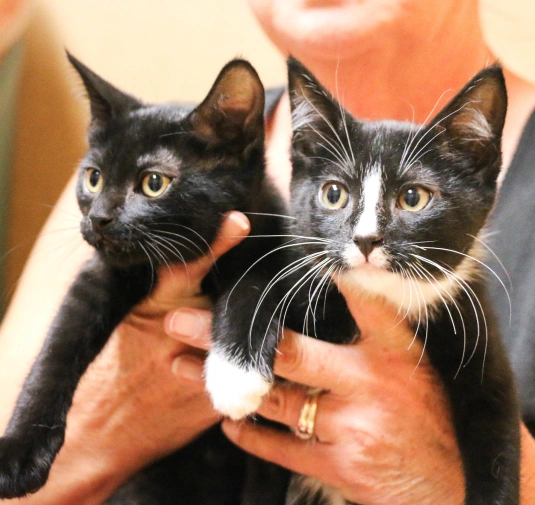
Will an adorable kitten be the newest addition to your family in the near future? Willowrun Veterinary Hospital can help you to ensure that your sweet little kitten will grow into a happy and healthy adult cat, and eventually a content and long-lived senior cat.
Kittens may seem cute and innocent, but they are designed to play, play, play! Their playful nature makes them endearing and fun, but it is important to remember that if you are adopting a new kitten, you should make sure you have the time to offer them appropriate interaction and playtime.
For new kittens, we recommend the following veterinary services to keep them safe, healthy, and feeling their best:
- Microchipping will help your cat be returned home to you if they are ever lost. Cats can survive as feral animals and have a natural desire to roam and ‘patrol their territory,’ so keep them safe with a microchip.
- Spay/neuter surgery can make your cat a better pet, and help protect them from certain infections and forms of cancer.
- Vaccinations are imperative for protecting your kitten from serious diseases. We recommend that kittens are vaccinated in a series of three visits between 8-16 weeks of age.

Spay/neuter Procedure
Spay surgery removes the uterus and ovaries of female animals. Neuter surgery removes the testes of male animals. The primary goal of both procedures is to stop the animal’s ability to reproduce.
Our doctors are highly experienced in performing safe and effective spay and neuter procedures in our technologically advanced surgical suite. We recommend this surgery for every companion animal that will not be intentionally used for breeding purposes. If you are considering whether spay and neuter is right for your pet, the following list explains why we recommend the procedure to all pets under our care:
Health:
Spayed and neutered pets have longer life expectancies because they are less likely to contract cancer or an infection of the reproductive system. Breast cancer risk is also decreased for female animals. Also, the strain that pregnancy and child-rearing have on the body can be avoided. Therefore, health is the number one reason we recommend spaying and neutering pets.
Expense:
The cost of spay and neuter surgery dwarfs in comparison to the costs associated with raising an unplanned litter. Ultrasounds, potentially a c-section, regular visits to the veterinarian, and vaccinations add up quickly. Also, caring for a litter or newly born puppies or kittens is extremely time-consuming. For many breeders, these activities are a job that they must take very seriously. If you are not ready to take on such a job, it is wise to have your animal spayed or neutered.
Improved Behaviors:
Male animals, in particular, have a desire to leave their home and wander in search of a mate. Female animals will often frequently urinate and exhibit other undesirable behaviors during their heat periods to attract male suitors. Although we love our pets, these behaviors are frequently bemoaned by pet owners. Spaying and neutering will decrease your pet’s urge to participate in these mate-seeking activities.
Control Pet Population:
Every year, millions of animals are brought to animal shelters in need of homes. North Carolina and the surrounding southern states, in particular, have a chronic stray animal problem. This problem will only continue for as long as there are more pets than there are owners with homes to provide for them. One of the leading ways to control the pet population is by preventing unplanned litters through spay and neuter surgery.
Prior to the surgery, our veterinary doctors will perform a pre-operative exam and blood testing to ensure that the animal is healthy enough to undergo the procedure. The procedure is typically recommended around 6 months of age, and is sometimes delayed further for giant breed dogs.
Following the surgery, we will closely monitor the pet’s behavior to ensure they are recovering as expected. Typically, the pet will be able to return home later the same day, and the post-operative care is not difficult. They might need a little more downtime than usual for the next 1-2 weeks.
Microchipping
Every year, millions of dogs and cats are separated from their families and brought to animal shelters or veterinary offices by concerned citizens. Sadly, the majority of these pets will never find their way home. But pets who have a microchip are far more likely to be reunited with their owners!
Microchips are small devices implanted underneath the skin. Each microchip is programmed to have a unique code. Once you register your pet’s microchip, the code will be associated with your contact information. Using a special scanner, a veterinarian or animal shelter worker will check your pet for a microchip if they become lost. If they have a chip, and it is registered, the animal care provider will be able to find your information in a secure national database. You will be contacted, and you and your pet will be able to have a happy reunion.
The microchip implantation process is safe and easy. No anesthetic is required, and the implantation takes only seconds. The microchip itself is only the size of a grain of rice, and the procedure is similar to that of a routine vaccination.
The microchip will be implanted between the pet’s shoulder blades. This area is not very sensitive, and it is safe for the microchip to be there. The microchip is also made of biocompatible materials that will not degenerate over time. Therefore, once implanted, your pet will never be without your information for the rest of their lifetime.
If your pet is from an animal shelter or purchased from a breeder, they may already have a microchip. Be sure to ask the party that was responsible for them before if they know of the animal having one. If this is the case, you can register their previous microchip with your new contact information.
Should you ever move or get a new phone number, it’s imperative that you update your pet’s microchip to match your current contact information. A microchip cannot do its job without your most up-to-date contact information!