New Clients First Exam is just $44!*

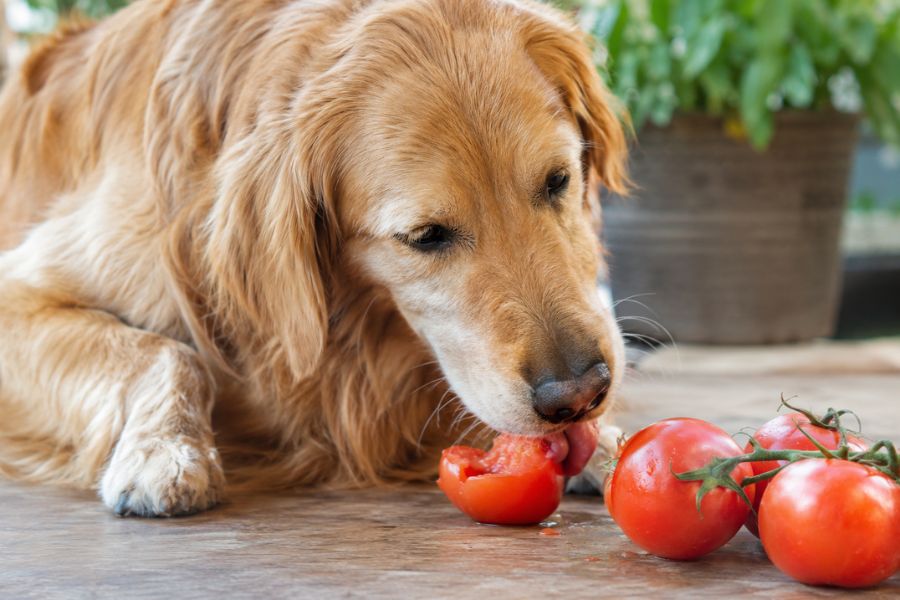
A dog staring at a tomato slice can make any pet parent wonder, “Can dogs eat tomatoes?” Yes, ripe red tomatoes can fit into many dogs’ diets in small portions. Tomato leaves, stems, green fruit, serving size, preparation, and a dog’s health can change the answer.
Can Dogs Eat Tomatoes?
Ripe, red tomato flesh is generally safe for dogs as an occasional treat. They should not replace complete, balanced dog food.
The tomato plant belongs to the nightshade family. Green parts contain tomatine and solanine. A small piece of ripe tomato is different from chewing through a garden plant.
Tomato-based foods need a separate check. Tomato sauce, soup, salsa, pizza toppings, and canned products may contain onion, garlic, salt, spices, or excess fat.
What Parts of a Tomato Are Safe?
Ripe red flesh is the preferred portion. Remove the stem and leaves. Wash the tomato, cut it into small pieces, and offer a modest amount.
Green tomatoes deserve caution. A small bite may not cause a problem, while larger amounts of unripe fruit or plant material warrant attention. Possible signs include vomiting, diarrhea, drooling, weakness, or poor coordination.
Severe reactions are uncommon but possible with significant exposure. Contact a veterinary professional promptly when a dog has eaten substantial plant material, shows symptoms, or the amount consumed is unknown.
How Much Tomato Can a Dog Eat?
Think of tomato as a treat, not a dietary staple. Start with one or two small pieces for a small dog and a few bite-sized pieces for a larger dog. Watch for digestive upset before offering it again.
Treats should remain a limited part of daily calories. A measured approach keeps treats enjoyable without turning them into too much daily nutrition.
Cutting tomato into small pieces lowers choking risk. Never give a whole tomato to a dog that gulps food. Plain, fresh tomato is preferable to seasoned or processed tomato products.
Dog-Friendly Vegetables Worth Considering
Several vegetables can provide variety when prepared without butter, sauces, salt, or seasoning.
Carrots offer crunch and can be served raw in suitable bite sizes or cooked until soft. Green beans provide fiber and can work as a low-calorie snack. Cucumber contains plenty of water and can be a refreshing treat. Zucchini is another mild choice.
Plain pumpkin can provide fiber, but canned pumpkin should contain pumpkin alone rather than sugar or spices. Cooked sweet potato can provide carbohydrates and fiber when served plain and cooled.
Broccoli can be offered in small quantities. Peas can suit many dogs when served plain.
Vegetables Dogs Should Avoid
Some vegetables are not appropriate for dogs. Onion, garlic, leeks, and chives can damage red blood cells and should not be used as dog treats.
Serve vegetables plain, identify every ingredient, and skip foods prepared with onion, garlic, rich sauces, or heavy seasoning.
Best Way to Serve Tomatoes to Dogs
Use ripe, washed tomatoes. Remove leaves and stems. Dice the flesh into manageable pieces. Serve it alone or mix a small amount into your dog’s regular meal.
Do not add salt, chili, garlic, onion, butter, or seasoning. Avoid tomato products made for people unless every ingredient has been checked and the product is clearly suitable.
A home garden deserves extra attention. Dogs that roam freely can chew tomato plants. Fencing or raised containers can reduce access.
When Tomato Eating Becomes a Concern
A few ripe tomato pieces usually do not call for alarm. A dog that consumes leaves, stems, many green tomatoes, or an unknown quantity needs closer assessment.
Call a veterinary professional when symptoms appear or exposure involved substantial plant material. Keep the product label, plant sample, or a photo available.
Do not induce vomiting unless a qualified professional specifically tells you to do so. Home remedies can create additional risks.
Building a Safer Vegetable Routine
Vegetable treats work best when they fit the dog, not a generic food list. Introduce one new vegetable at a time. Keep portions small. Monitor stool quality, appetite, energy, and comfort.
A balanced commercial diet or appropriately formulated home diet should supply the foundation of nutrition.
Pet parents unsure about food choices can discuss their dog’s diet during routine veterinary care. Dogs with appetite changes, repeated digestive problems, or weight concerns may need individualized nutrition guidance.
The Bottom Line
Ripe red tomato flesh can be a reasonable occasional treat for many dogs. Remove leaves and stems, avoid green plant material, keep portions modest, and skip seasoned tomato foods. Carrots, green beans, cucumber, zucchini, pumpkin, sweet potato, broccoli, and peas offer other choices. Knowing what is safe, what is risky, and when to seek help makes vegetable treats easier to manage.
Frequently Asked Questions(FAQs):
1. Can dogs eat raw tomatoes?
A: Yes. Dogs can eat small amounts of ripe, raw tomato flesh. Wash it, remove the stem and leaves, cut it into bite-sized pieces, and serve it plain. Stop if digestive upset develops.
2. Are green tomatoes poisonous to dogs?
A: Green tomatoes contain higher levels of tomatine than ripe tomatoes. Risk depends on the amount consumed and the dog. Contact a professional if your dog eats substantial green fruit or plant material.
3. Can dogs eat tomato sauce?
A: Plain tomato sauce is not automatically safe. Many sauces contain onion, garlic, salt, sugar, spices, or rich ingredients. Check the entire ingredient list before sharing any tomato-based product with your dog.
4. What vegetables are healthiest for dogs?
A: Carrots, green beans, cucumber, zucchini, plain pumpkin, cooked sweet potato, and small servings of broccoli or peas can provide useful variety. Preparation matters: vegetables should be plain and served in appropriate portions.
5. Can tomatoes cause diarrhea in dogs?
A: They can. Any unfamiliar food may cause digestive upset, especially in large portions. Tomatoes may irritate some sensitive dogs. Reduce the amount or stop serving them if loose stool, vomiting, or discomfort appears.
6. What should I do if my dog eats tomato leaves?
A: Remove access to the plant and note how much was eaten. Watch for vomiting, diarrhea, drooling, weakness, or behavior. Contact a veterinary professional if exposure was substantial or symptoms appear.