
New Clients First Exam is just $44!*


Precise Diagnostic Support for Pets
When something seems wrong with your pet, the cause often isn’t obvious. Bring them to Willowrun Veterinary Hospital and we’ll use our advanced diagnostic expertise and technology to determine exactly what’s going wrong— and how we can help treat it.
In-House Laboratory
In addition to our exam rooms, surgical suites, boarding facilities, and grooming facilities, Willowrun Veterinary Hospital also provides its clients with an in-house diagnostic laboratory.
This addition to our practice allows us to run many routine tests on-site. A few common examples of these tests include:
Complete blood count examines the varying ratios of different blood cells in a pet. This test can diagnose anemia, infections, and inflammation. It can also indicate if the pet has the ability to form healthy blood clots. This is one of the most basic, and yet important, veterinary blood tests that we perform.
Blood chemistry panel is actually a combination of blood tests performed on one sample. The panel, or “biochemical profile,” is designed to pinpoint analysis of a specific organ such as the kidneys, liver, and pancreas.
Specialized Diagnostic Testing includes advanced in-house tests that provide additional information about your pet's health. We offer 4DX testing to screen for heartworm disease and common tick-borne illnesses, pancreatitis testing to help diagnose inflammation of the pancreas, and BNP heart testing to evaluate whether heart disease may be contributing to your pet's symptoms. These tests provide rapid results, allowing our veterinarians to diagnose conditions and recommend appropriate treatment without waiting for an outside laboratory.
Urinalysis is a test performed on a urine sample. This test primarily assesses the health of the kidneys and urinary system, but it can also provide additional information about the body. Urinalysis can diagnose diabetes, urinary tract infections, bladder infections, and internal bleeding. This test is routine for senior pets.
Electrolytes testing looks at electrolytes in the body. Electrolytes are essential bodily salts such as calcium, potassium, magnesium, and sodium. They play a key role in regulating fluids in the body, balancing blood acidity and pressure, and repairing damaged tissues. Conducting electrolytes testing can provide insight into dehydration, bone metabolism, and general body health.
Thyroid testing is performed to diagnose the health of the thyroid gland. This gland plays a key role in metabolism, general mood, and heart and digestive function. Thyroid disorders are common, particularly among older pets. This test can help to diagnose them. Being able to perform the above tests on our premises expedites the diagnostic process. Your results will be available faster and we will be able to be involved in testing every step of the way to guarantee complete clinical accuracy.

Digital X-ray
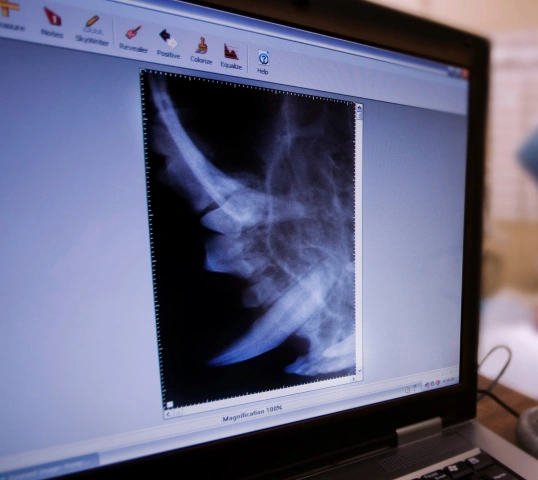
Digital radiography is a safe and effective diagnostic tool and the most common form of radiography used by veterinarians today. The procedure is completely non-invasive. Willowrun Veterinary Hospital provides the most cutting-edge, advanced form of this technology using our digital system.
The procedure works by using an x-ray machine to create images of the musculoskeletal system using x-ray waves that pass through the pet’s body. These images are then analyzed by a trained radiologist. With the resulting images they provide, conditions such as fractures, arthritis, and pneumonia can be diagnosed.
Digital x-rays have several benefits over traditional film x-rays, these include:
- Faster production of images- this means that the animal does not have to sit still for quite as long, and they are also exposed to less radiation
- Greater precision- the resulting product is more detailed and accurate than those produced with film
- Ease of electronic storage- instead of being filed away physically, digital images can be saved perpetually in our computer database
- Ease of electronic transmittal- we can easily send you a digital version of the resulting images and, if a specialist opinion is warranted, we can also send them the x-rays with the click of a mouse
Often, x-rays are used in conjunction with other diagnostic tools, such as laboratory tests or ultrasound imaging.
Ultrasound Services
Willowrun Veterinary Hospital is proud to offer advanced abdominal ultrasound and echocardiogram services for both our patients and pets referred by local veterinary hospitals.
Ultrasound is a safe, non-invasive imaging tool that uses sound waves to create real-time images of your pet's internal organs and soft tissues. This advanced technology allows our veterinary team to evaluate structures such as the liver, kidneys, bladder, spleen, gastrointestinal tract, heart, and other organs without surgery or radiation exposure.
Ultrasound can help diagnose a wide range of conditions, including abdominal disease, organ abnormalities, heart disease, pregnancy, certain cancers, fluid accumulation, and other complex medical concerns. It often provides important diagnostic information that cannot be obtained through X-rays alone.
DVM Ultrasound Referral Form
Abdominal Ultrasounds
An abdominal ultrasound allows our veterinarians to examine your pet's internal organs in detail, helping identify abnormalities affecting the liver, kidneys, spleen, pancreas, bladder, gastrointestinal tract, adrenal glands, and surrounding tissues. This advanced imaging is often recommended when bloodwork, X-rays, or a physical examination indicate that additional information is needed.
Echocardiograms
An echocardiogram is a specialized ultrasound of the heart that evaluates the heart's structure and function. It allows our team to assess the heart chambers, valves, blood flow, and muscle function to help diagnose heart disease, heart murmurs, congenital abnormalities, and other cardiac conditions. Echocardiograms provide valuable information that helps guide treatment and monitor heart health over time.
What to Expect During the Procedure
To ensure the highest quality images and keep your pet comfortable throughout the examination:
- An intravenous (IV) catheter will be placed.
- Your pet will receive sedation for the procedure.
- The area being examined, typically the abdomen, will be shaved.
- A water-based gel will be applied to the skin. The gel may feel cool, but it allows the ultrasound probe to make proper contact and produce clear images.
- The ultrasound probe is gently moved over the area to capture detailed images for evaluation.
Most ultrasound appointments are scheduled as morning drop-off visits and are completed within an hour, although the exact time depends on the complexity of the examination.
Ultrasound Services for Pet Owners and Referring Veterinarians
Willowrun Veterinary Hospital proudly provides in-house ultrasound services for both our own patients and pets referred by other veterinary practices. We value our relationships with local veterinarians and are committed to providing advanced diagnostic imaging while supporting the ongoing care provided by each pet's primary veterinarian.
For referred patients, our team performs the ultrasound examination, and a board-certified specialist reviews the findings and provides recommendations. We promptly share the specialist's report and recommendations with the referring veterinarian so they can continue directing the pet's treatment plan.
By offering abdominal ultrasounds and echocardiograms in-house and accepting referrals from area veterinary hospitals, we provide timely access to advanced diagnostic imaging, helping pets receive answers sooner and supporting veterinarians throughout our community with high-quality diagnostic services.
DVM Ultrasound Referral Form
Allergy & Dermatology Testing
Dermatology is the study and treatment of skin conditions. One of the most common causes of dermatitis, the general term for skin irritation, is allergies. But dermatitis can also be caused by infections, parasites, autoimmune diseases, skin cancer, and hormonal disorders.
If your pet has any of the following symptoms to an extreme degree or a cluster of a few, we highly encourage you to schedule a visit to give your pet relief.
- Flaky or red skin
- Hair loss
- Persistent scratching or biting of the skin
- Watery or irritated eyes
- Excessive licking of the paws or other areas of the skin
- Lumps or bumps
- Hot spots
- Vomiting
- Diarrhea
- Irritability
The first step in the dermatology protocol is to diagnose the cause of the problem. This process will begin with a physical examination. The veterinarian may also order tests to further investigate such as skin biopsies, a complete blood count, and allergy testing, depending on their professional opinions of the symptoms.
Once the nature of the disease has been categorized, our veterinarians can then assist with a treatment that will relieve your pet of the itching, burning, and general discomfort associated with dermatitis. These treatments may range from a topical cream to oral medicine, to a more aggressive treatment if the condition is a pathology such as cancer.
For allergies, shots and oral medication are popular treatment options. If the allergen is something that can be avoided, such as a dietary component or a specific household product, this will be advised.
If you suspect your pet has an allergy, pay attention to how they react when exposed to the following common pet allergens:
- Grass or weeds
- Different food ingredients such as protein sources or grains
- Household cleaners
- Perfumes
- Dander
- Cigarette smoke
- Prescription drugs
- Fleas
Your careful observation supplemented with an allergy test can help your pet to avoid irritation and allergic reactions.